How UX Psychology and Nudges solved a critical data gap impacting revenue — without redesigning the entire system.
Pulse, the internal project management tool, suffered from a critical data gap. Missing time logs meant leadership could not bill clients accurately or predictably.
The real challenge wasn't technical — it was human. How do you change forgetful behavior without building an intrusive interface that adds friction to an already established workflow?
"The problem was never how hard it was to log hours. It was the lack of a trigger at the right moment."
Before proposing any solution, I led the discovery process with quantitative research and interviews with the tool's users. The goal was to understand the root cause of the behavior — not just the symptom.
Analysis of logging patterns: when people logged their hours, which days had the most gaps, and how that correlated with day of the week and time of day.
Conversations with team members revealed that the main obstacle was forgetfulness — not resistance or difficulty using the tool.
The research confirmed the hypothesis: the pain wasn't in the logging flow itself, but in the absence of a contextual trigger at the exact moment people forgot. Users simply didn't realize they had left gaps behind.
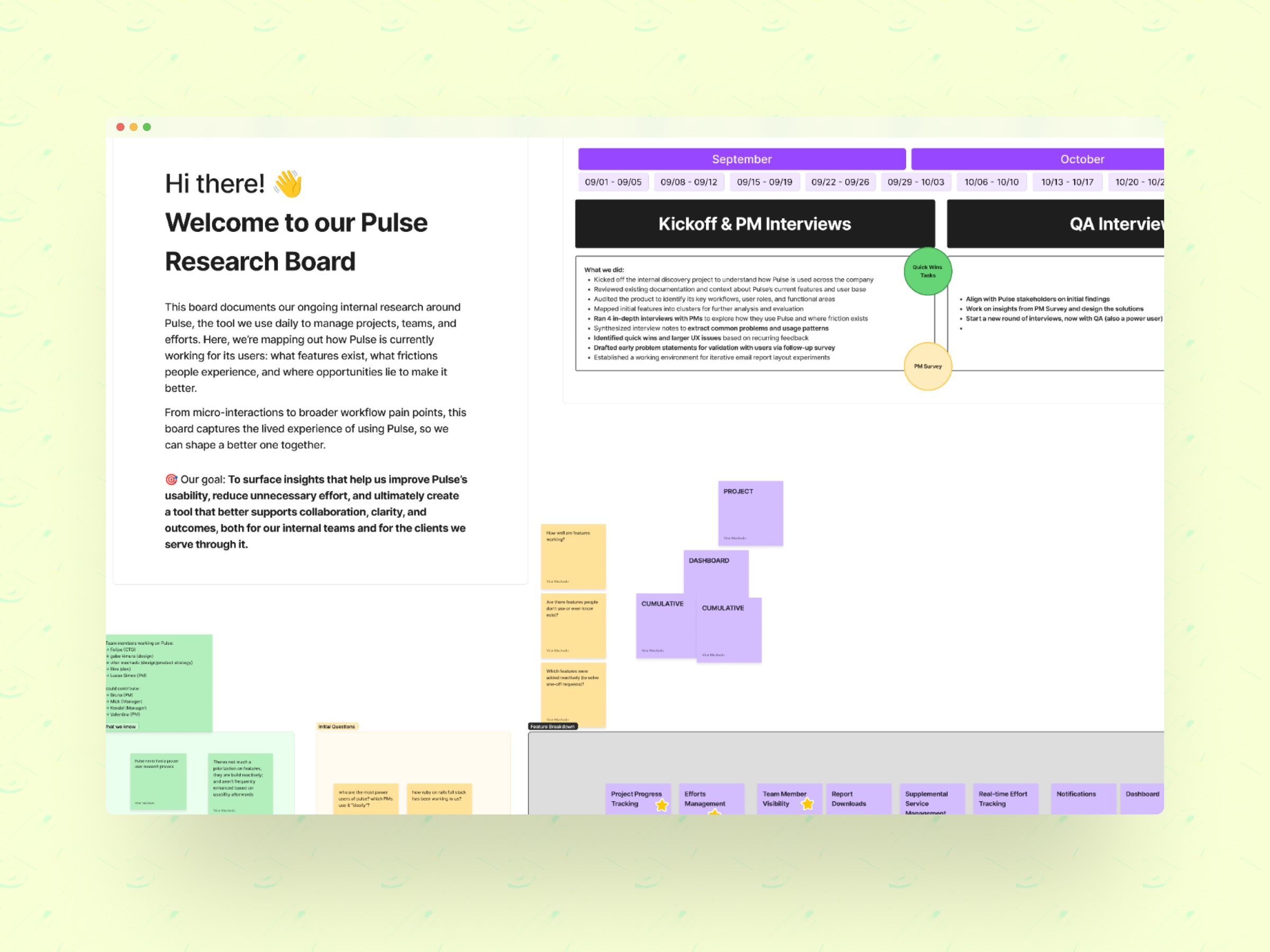
Screenshots of the research material: missing-log charts by day of the week and notes from the user interviews.
Instead of redesigning the whole system — which would have been expensive to build and risked user pushback — I applied UX Psychology and Behavioral Nudges.
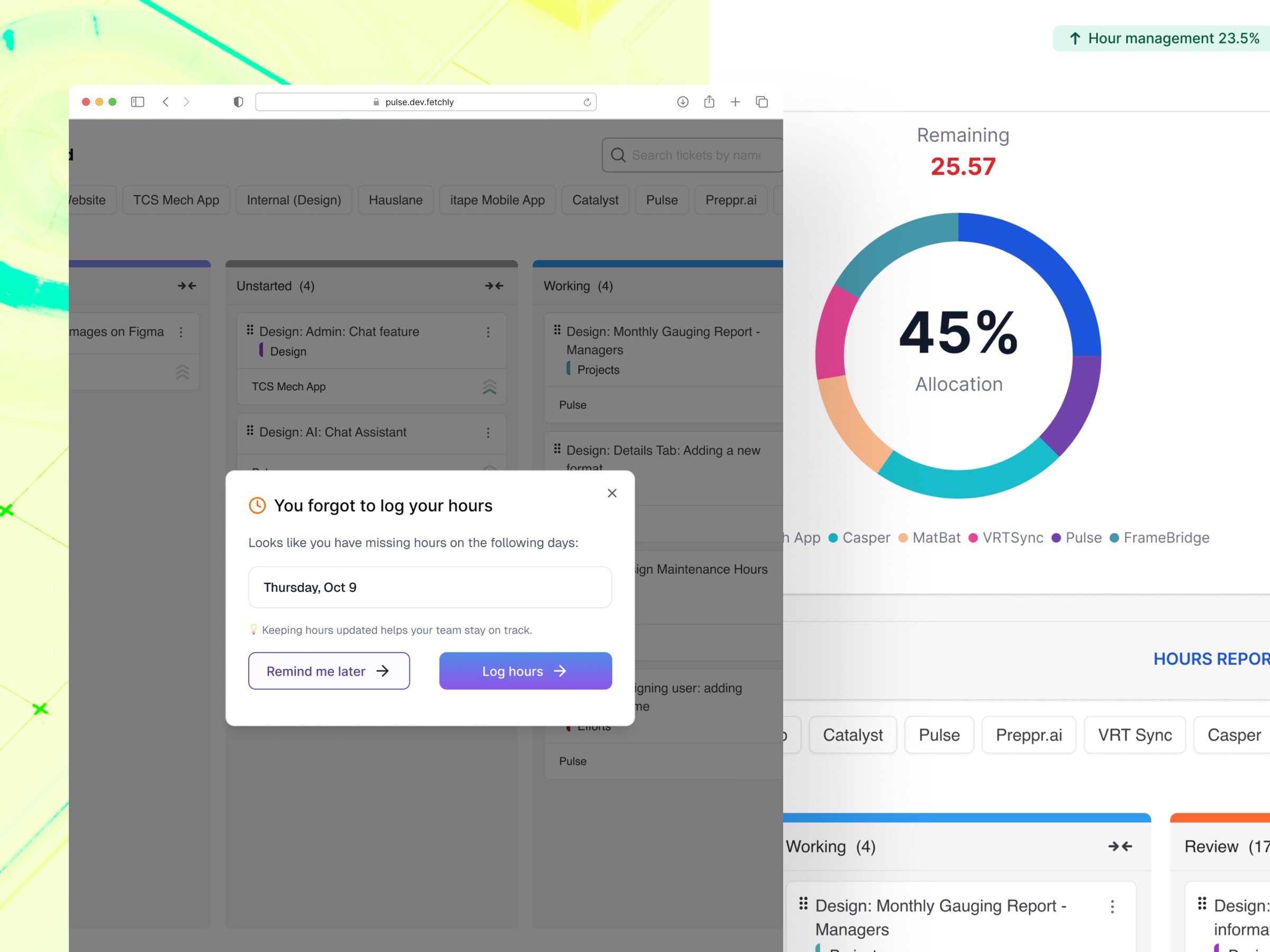
The solution was a smart, contextual reminder modal that appeared only when the system detected gaps in the logs, pointing to the exact missing dates. Specificity was crucial: telling someone "you didn't log Thursday" is far more effective than a generic notification.
The modal appeared automatically when opening Pulse whenever gaps were detected — right when the user was already in the tool's context.
Instead of "you have missing hours", the system pointed to exactly which dates were incomplete, making immediate action easy.
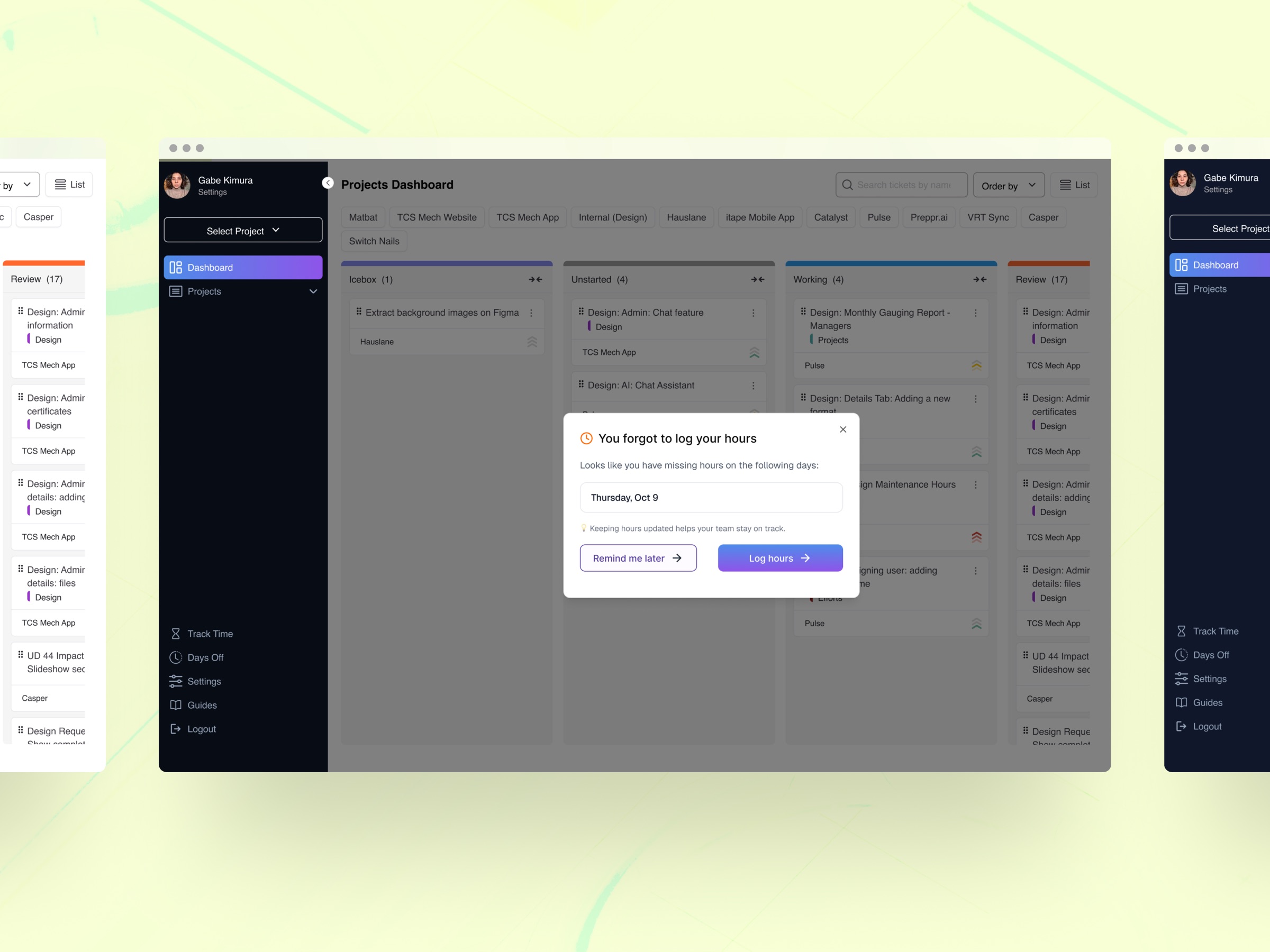
Prototype of the contextual reminder modal: "You forgot to log your hours — Looks like you have missing hours on the following days: Thursday, Oct 9."
A solution with very low development cost delivered direct, measurable impact on company revenue.
| Category | Result |
|---|---|
| Revenue | 37% reduction in missing weekly logs, enabling more accurate and predictable client billing. |
| Product | The tool's first product roadmap built on research evidence — not assumptions. |
| Development | Solution shipped at low technical cost, with no need to restructure the existing system. |
| Behavior | Sustainable change in user behavior without adding friction to the workflow. |
"A simple solution that proved the most effective design isn't always the most complex — it's the most precise."